 Practical information
 Authorizations and regulations
 Documentation
 Around the abbey
 Contact
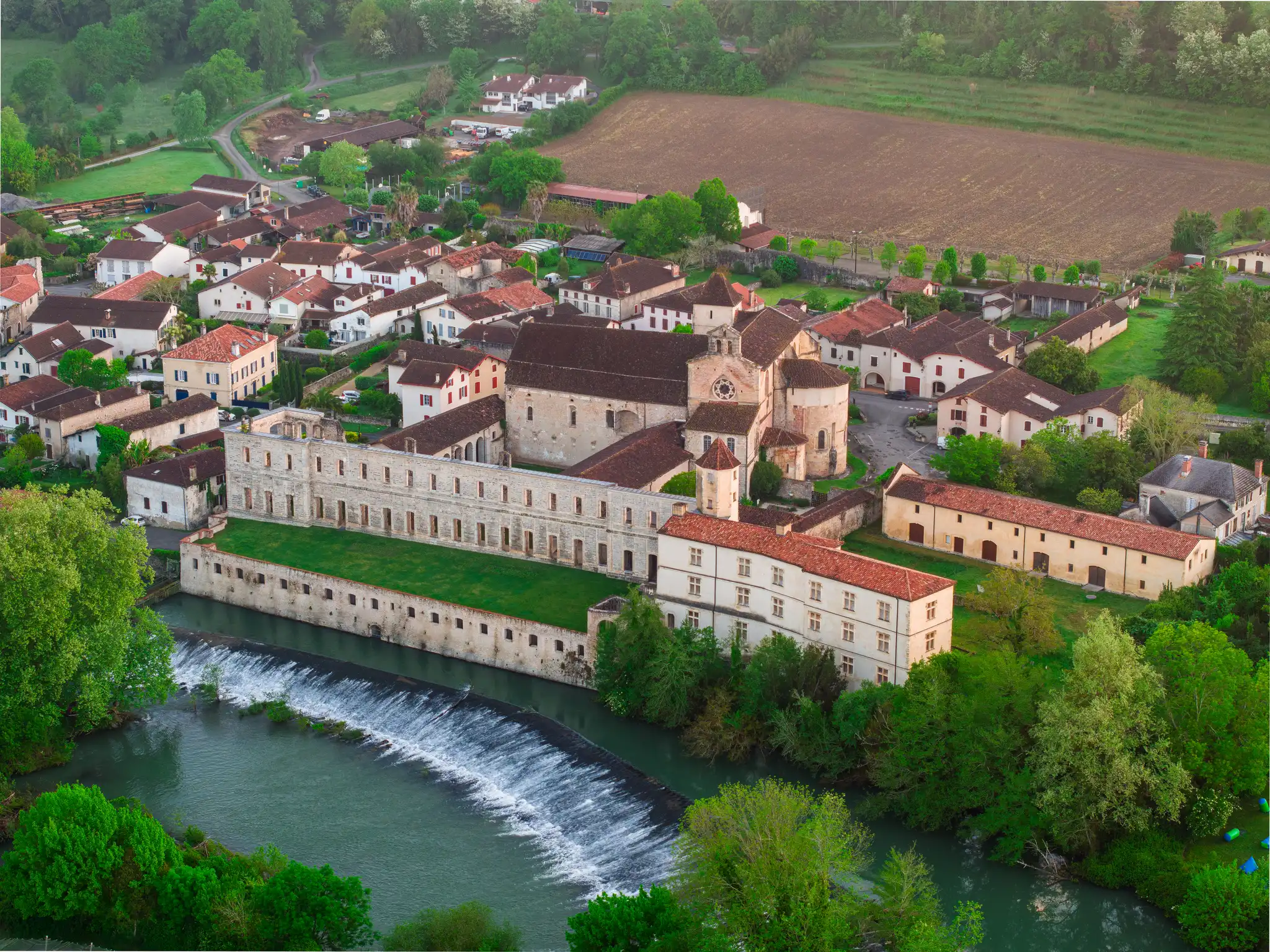
This former Benedictine abbey, known as Saint-Jean, stands on the banks of the Gave d'Oloron, the Pyrenean river that flows through the “Petite Cité de Caractère®” of Sorde-l’Abbaye. It forms a heritage site that reads like a historical frieze spanning two thousand years! Founded in the 10th century, destroyed and rebuilt several times, it remained active until the French Revolution. The monks established it on the ruins of an ancient villa, a country palace with thermal baths and decorated with mosaics.
The 21st-century abbey is being revealed through restoration work, archaeological excavations and scientific research that are piecing together centuries and centuries of history!
The remains of the ancient villa, the former abbey church, the monastic buildings and the abbot's residence make up this highly complex heritage site dating back two thousand years. Follow the timeline from Antiquity to the 21st century!
The grounds beneath the abbey reveal a huge luxury villa!
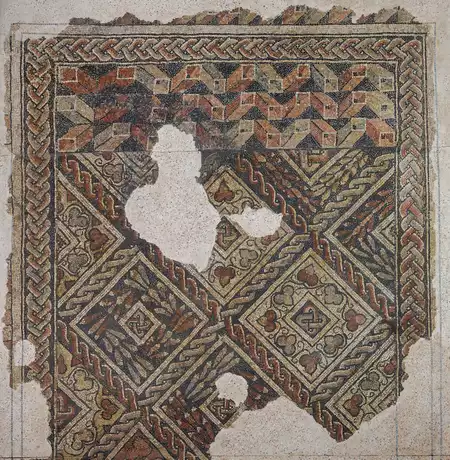
Before the Benedictine community settled here in the 10th century, large landowners already occupied this site. Archaeological excavations in the abbey have uncovered the remains of an Aquitanian-Roman villa, in particular a private thermal bath complex or balneum heated by hypocaust (underfloor heating) and mosaic pavements dating from the late 4th to early 5th century (Aquitaine School style).The dimensions of this villa, at least 6,000 m², make it a veritable country palace, which is exceptional in southern Aquitaine.
The choice of location is by no means random: the villa is set in fertile land, surrounded by the Gave de Pau and Gave d'Oloron rivers, ideal for farming the estate to which it is attached.
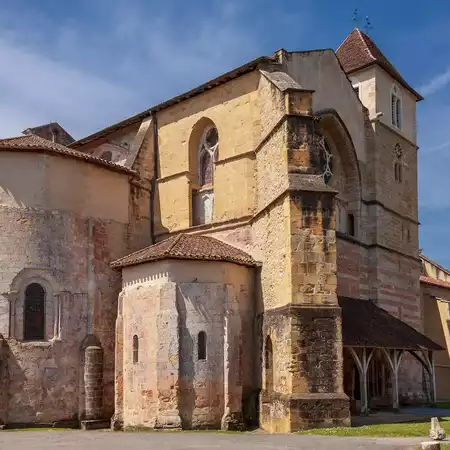
The medieval abbey and its church of Saint John the Baptist
A deed of donation dated 975 attests to the existence of the Benedictine abbey in the 10th century. It is one of the oldest in Gascony, with extensive land holdings and a treasure trove of relics on display in the abbey church. Destroyed many times over, the abbey today presents the image of a complex composite ensemble.
Its medieval appearance is little known. Only the old abbey church has retained Romanesque elements, such as the tripartite apse, the four historiated capitals of the apsidioles, the carved portal on the north façade and the sumptuous mosaic floors in the choir, the most sacred space in the sanctuary.
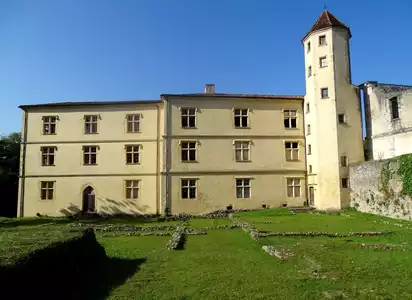
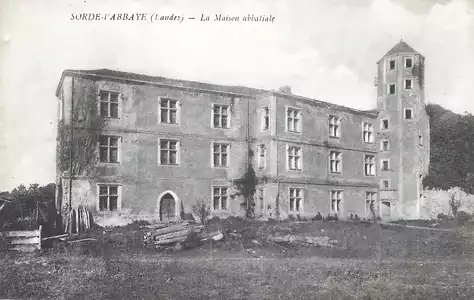
The end of the Middle Ages was marked by the abbey's entry into the commende system. The abbots of Sorde, sometimes mere laymen, were appointed by royal privilege and received two-thirds of the abbey's income for their personal enjoyment. Their residence, a veritable stately home on three levels with carved mullioned windows, illustrates the wealth of the abbots of Sorde.
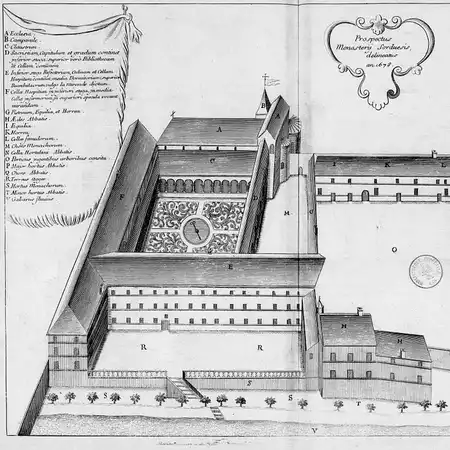
The Maurist revival, 17th and 18th centuries
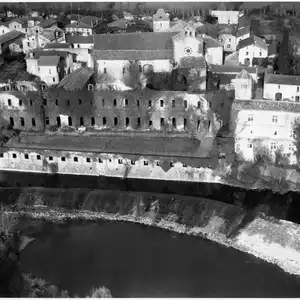
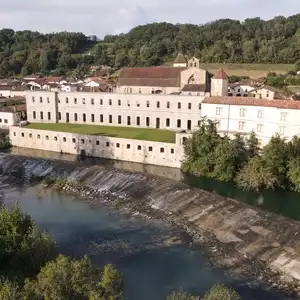
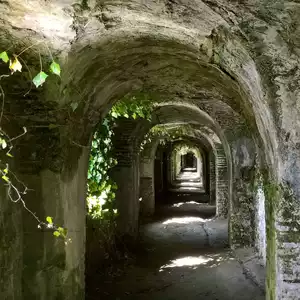
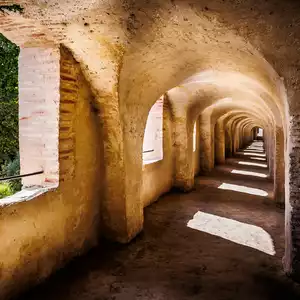
After the Wars of Religion between Protestants and Catholics which ravaged the abbey in the 16th century, it was rebuilt in 1663 by the Congregation of Saint-Maur, a reformist branch of the Benedictines. The Maurists developed major projects to rebuild the regular premises. Buildings are constructed around the cloister in a sober, classical style, opening onto the landscape through numerous large windows. The monumental south façade opens onto a terrace overlooking the Gave d'Oloron river. Below, a cryptoportic, a long underground gallery, is connected to a landing stage and houses a series of cellars called granges batelières. This highly unusual complex, dedicated to trade, took advantage of the river for transporting goods. The abbey had links with the port of Bayonne, accessible from the Gave d'Oloron, and the last monks may have had plans to use this cryptoportic to develop a centre of activity linked to salmon, a very fruitful and lucrative resource!
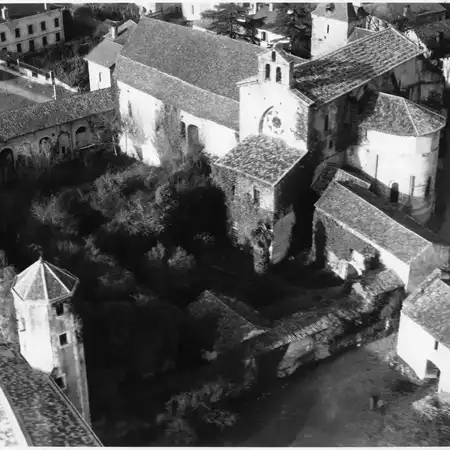
End of monastic activity and ruin of the abbey
Monastic activity came to an end during the French Revolution with the forced departure of the monks in 1791. The abbey was divided into lots and sold as national property. The church, which became a parish church, underwent alterations in the 19th century. The monastic buildings, partly ruined and left to looting, and the abbey lodgings became the property of local dignitaries. The entire abbey was thus divided into three separate properties, each of which would have its own history.
The 21st century abbey
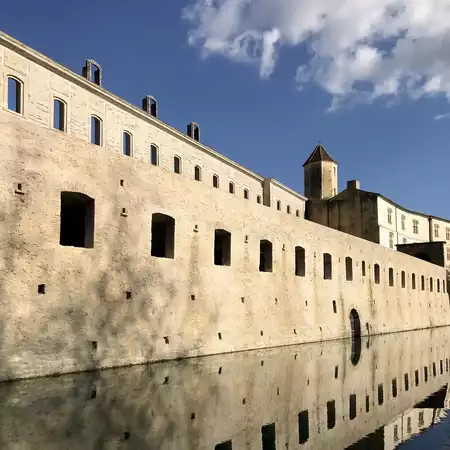
The inclusion of Sorde Abbey on UNESCO's World Heritage List as part of the Routes of Santiago de Compostela in France in 1998 and its classification as a historic monument in 2008 have recognised the historical and heritage value of this exceptional site. Over the past twenty years, several restoration projects have been carried out: Romanesque mosaics in the church, mosaics in the ancient villa, façades and roof of the abbey residence, monastic buildings. In 2019, the three local authorities that own and manage the site entered into a tripartite agreement: the Municipality of Sorde (owner of the church and monastic buildings), the Community of Municipalities of the Pays d'Orthe and Arrigans (manager of the monastic buildings), and the Department of Landes (owner of the abbey lodgings and the ancient archaeological site) are working together to preserve, restore and pass on this heritage. This approach led to the launch of a Collective Research Project (PCR) Sordus and the establishment of a multi-year programme of works. Weakened by an alarming state of disrepair, in 2023 the church benefited from the Heritage Mission led by Stéphane Bern and deployed by the Heritage Foundation to support its extensive restoration programme (work to begin in 2026).
Here you can find a brief overview of the restoration work carried out at Sorde Abbey and the programmes currently underway...
2002–2023: Restoration of monastic buildings
In 2002, the Community of Municipalities of Pays d'Orthe and Arrigans undertook the restoration of the monastic buildings, which had been severely damaged over the centuries by a series of wars, destruction, looting and the ravages of time. Stéphane Thouin, Chief Architect of Historic Monuments, has been entrusted with conducting a preliminary study for a multi-year restoration programme. The interventions include consolidating and stabilising ruined masonry, installing protective measures and roofing to preserve the remaining structures without altering the buildings' ‘semi-ruined’ appearance. There are no plans to reconstruct the missing parts.
This restoration programme was carried out with the support of the State (Regional Directorate for Cultural Affairs), the Nouvelle-Aquitaine Region, the Landes Department and the Heritage Foundation.
- 2007 to 2015: phases of work to ensure the stabilisation of all the elevated remains.
- 2021 to 2023: restoration of the cryptoportic, an unusual and rare architectural feature built beneath the terrace in the 18th century.
The earthworks above the cryptoporticus were accompanied by archaeological excavations. These revealed walls dating from before the cryptoporticus was built and a remarkable system for waterproofing the vaults using buried tile roofs.
2008–2017: The abbey residence and the ancient villa
In 2004, the Landes Department became the owner of the abbey residence and its ancient archaeological site.
- 2008–2011: Waterproofing of the abbey residence (roof, framework, exterior cladding) and restoration of the outbuildings
- 2012–2017: Restoration of ancient mosaics (discovered in the courtyard of the abbey residence)
Saint John's Church, former abbey church, currently undergoing restoration

2006–2007: Removal and restoration of Romanesque mosaics located in the main apse.
2022: a health assessment of Sorde Abbey reveals an alarming state of disrepair threatening the abbey church with ruin. A project to restore the interior and exterior of the church is drawn up to reintegrate the church into the full tour of the abbey site.
The municipality of Sorde-l'Abbaye, owner of the building, has obtained the support of Stéphane Bern's Mission Patrimoine, deployed by the Fondation du Patrimoine and supported by the Ministry of Culture and La Française des Jeux. Sorde Abbey has been selected as an iconic site in Nouvelle-Aquitaine for the 2023 Heritage Lottery.
A cheque for € 375,000 is presented to the municipality of Sorde, owner of the building, and a fundraising campaign is launched for a period of five years.
2026: Start of restoration work on the abbey church (first phase: roof and walls)
The Collective Research Project (PCR) Sordus "From Roman villa to Maurist abbey’ aims to understand the various buildings that have stood on the site from Antiquity to modern times. It's quite a programme... but one that will enable us to piece together the true history of Sorde Abbey!
This scientific project has been entrusted to the Institute for Research on Ancient Architecture (IRAA) at the University of Pau and Pays de l'Adour, under the direction of Laurent Callegarin. It is supported by the DRAC Nouvelle-Aquitaine – Regional Archaeology Service – and the Landes Department.
Spanning three years (2023–2025), the Sordus PCR will conduct documentary, archaeological and architectural studies to document and better understand the history of this highly complex and monumental site, which has been shaped by three major periods: the ancient villa, the medieval abbey and the Maurist abbey of the 17th and 18th centuries.
It brings together archaeologists, historians and art historians, architects, paleoanthropologists and geologists.
Among the researchers : Laurent Callegarin (lecturer in Roman history and director of the Pau branch of the IRAA-CNRS), Stéphane Abadie (doctor of medieval history), Louis Lopeteguy (doctoral student in architectural archaeology at the University of Bordeaux) and Thibaut de Rouvray, historian and specialist in the Maurists .
Research 2024 :
In 2024, Sorde was literally examined, dissected, fractured and cored...
All available scientific methods have been used to reveal the two thousand year history of the abbey site. Medieval and modern archives, combined with architectural remains, help to understand the evolution of the Benedictine monastery. They also provide insight into the relationship between the convent and the Gave d'Oloron river, whose bed has been surveyed by geomorphologists.
The archaeological surveys accompanying this research aim to excavate the grounds of Sorde Abbey.
Two excavations carried out in 2024 revealed new data that allow us to revisit :
- the chronology of the Gallo-Roman villa ;
- its initial structure before its extension – revised upwards due to the discovery of a new mosaic floor – during late antiquity ;
- the evolution of the enclosure, remodelled from the monastery ;
- the medieval cloister and the burials that took place there from the 13th to the 19th century.
Finally, research into architectural archaeology has provided a better understanding of the structure of Romanesque churches.